
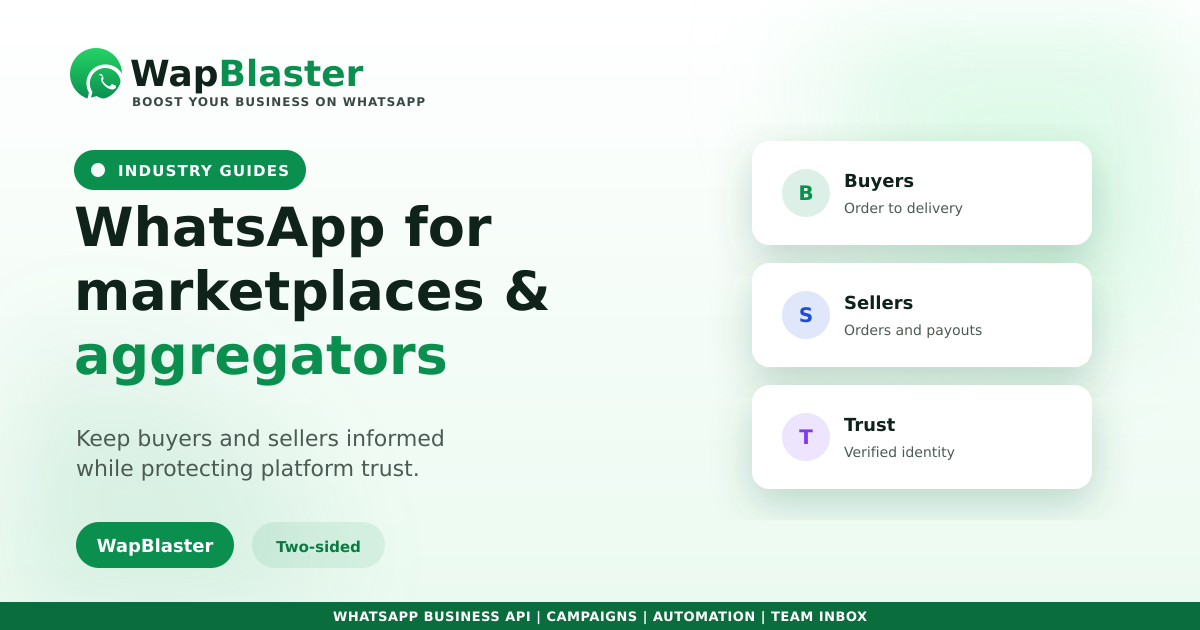
A marketplace has a harder messaging problem than a single business: two different audiences, transactions you facilitate rather than fulfil, and a reputation that depends on both sides behaving. WhatsApp handles this well if you design it deliberately. Here is how.
Serve both sides differently
Buyers and sellers need different messages, cadence and tone. Treating them as one list is the classic mistake.
- Buyers: order confirmation, dispatch, delivery, support.
- Sellers: new order alerts, payout updates, listing issues.
- Separate segments and separate templates for each.
Keep transactional messaging fast
On a marketplace, most messages are utility rather than marketing: status updates tied to a specific transaction. These are the ones that reduce support load, especially order tracking updates that pre-empt "where is my order?".
- New order alerts to sellers within seconds.
- Status updates to buyers at each milestone.
- Automated reminders for seller action required.
Protect trust
Your brand carries the blame for both sides' behaviour, so messaging is a trust tool. Verified identity reassures buyers the message is genuinely from the platform, and clear escalation routes stop disputes festering. Route complex cases to a human through a shared inbox with proper roles.
Mind the policy boundary
Because you message on behalf of a transaction, be careful to collect consent for each side and to keep promotional messaging separate from transactional updates, per policy. Mixing them is what gets marketplace numbers reported.
Frequently asked questions
How do marketplaces use WhatsApp?
For two distinct audiences: buyers get order confirmation, dispatch, delivery and support messages, while sellers get new order alerts, payout updates and listing issues. Each side needs its own segments, templates, cadence and tone.
Are marketplace messages marketing or utility?
Most are utility, since they are transactional updates tied to a specific order. That keeps them welcome and appropriately priced. Promotional campaigns are marketing and need separate consent, and mixing the two causes reports and restrictions.
How does WhatsApp reduce marketplace support load?
Proactive status updates at each milestone pre-empt most "where is my order?" enquiries, and automated reminders prompt sellers to act before a buyer complains. A chatbot handles common questions, with humans picking up disputes.
How do marketplaces protect trust over messaging?
Use a verified business identity so buyers know messages genuinely come from the platform, provide clear escalation routes so disputes do not fester, and route complex cases to human agents through a shared inbox with role-based access.
Message both sides at scale. Explore WapBlaster API or start free.