

A lead who does not buy immediately is not lost, they are waiting to be convinced. A nurturing sequence does that convincing automatically, delivering the right message over time until the lead is ready. On WhatsApp, where messages actually get read, well-built sequences convert leads that a single follow-up would have lost.
What a nurturing sequence is
It is a planned series of messages triggered by an action, an opt-in, a download, an enquiry, that guides a lead from interest to purchase over days or weeks.
Lead with value, not the pitch
The fastest way to lose a new lead is to sell immediately. Early messages should help and build trust.
- Open with a warm welcome and a quick win.
- Educate and answer common objections.
- Introduce the offer only once trust is established.
Trigger from behaviour, not just time
Rigid time-only sequences ignore what the lead actually does. Behaviour-based triggers keep messages relevant, someone who clicked a product link should get a different next message than someone who went quiet. This is the heart of effective drip campaigns.
A simple sequence that works
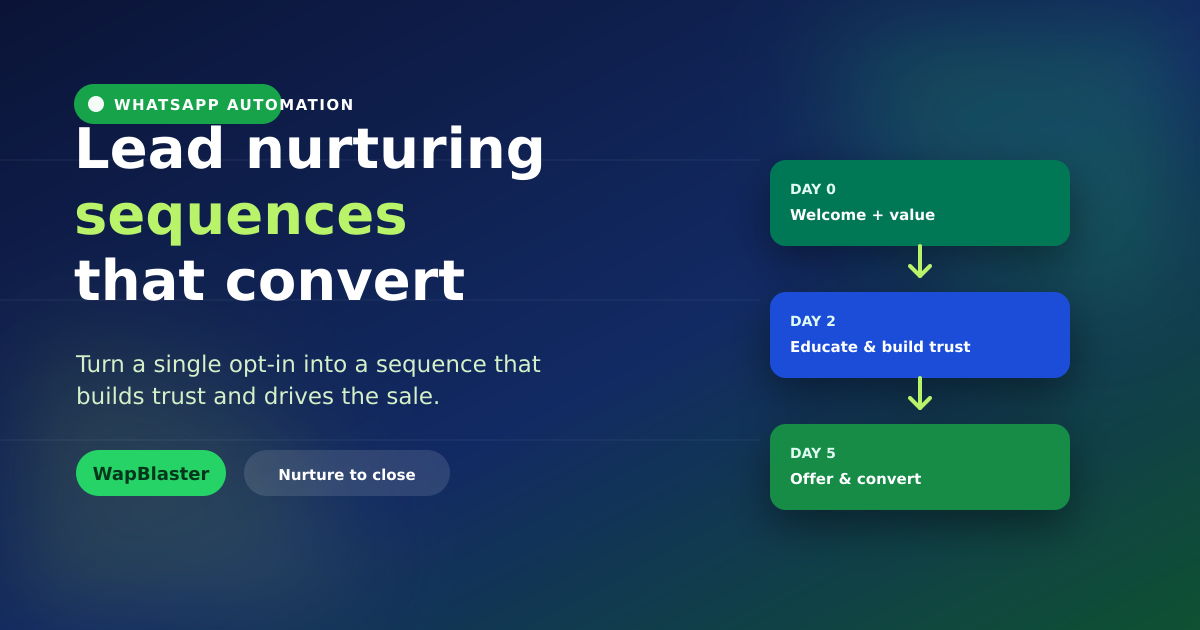
- Day 0: welcome, deliver on what they opted in for.
- Day 2: educate, share a tip or a proof point.
- Day 5: present a clear, relevant offer with an easy next step.
Keep it welcome and measured
Only message opted-in leads, keep every message useful, and offer an easy opt-out, in line with policy. Track replies and conversions at each step, find where leads drop off, and refine that message. Small improvements compound into a materially better conversion rate.
Frequently asked questions
What is a WhatsApp lead nurturing sequence?
It is a planned series of messages triggered by an action like an opt-in or enquiry, designed to guide a lead from interest to purchase over days or weeks by building trust before presenting an offer.
How do I build a sequence that converts?
Lead with value, welcome, educate and answer objections, before pitching, and use behaviour-based triggers so each message stays relevant to what the lead actually does. Introduce the offer only once trust is established.
Should sequences be timed or behaviour-based?
Behaviour-based triggers outperform rigid time-only schedules because they respond to what the lead does, such as clicking a link or going quiet, keeping the sequence relevant and personal rather than generic.
How do I keep nurturing sequences from annoying leads?
Only message opted-in leads, keep every message genuinely useful, respect sensible frequency, and offer an easy opt-out. A helpful sequence builds trust; an over-eager one gets muted or reported.
Nurture leads on autopilot. Explore automation or start free.