WhatsApp is one of the highest-return channels, but "how much should we spend?" still trips up many teams. The answer is not a fixed number, it is a structure: understand the cost components, start small, and scale what returns. Here is how to plan a WhatsApp marketing budget in 2026 and tie it to results.
The three cost components
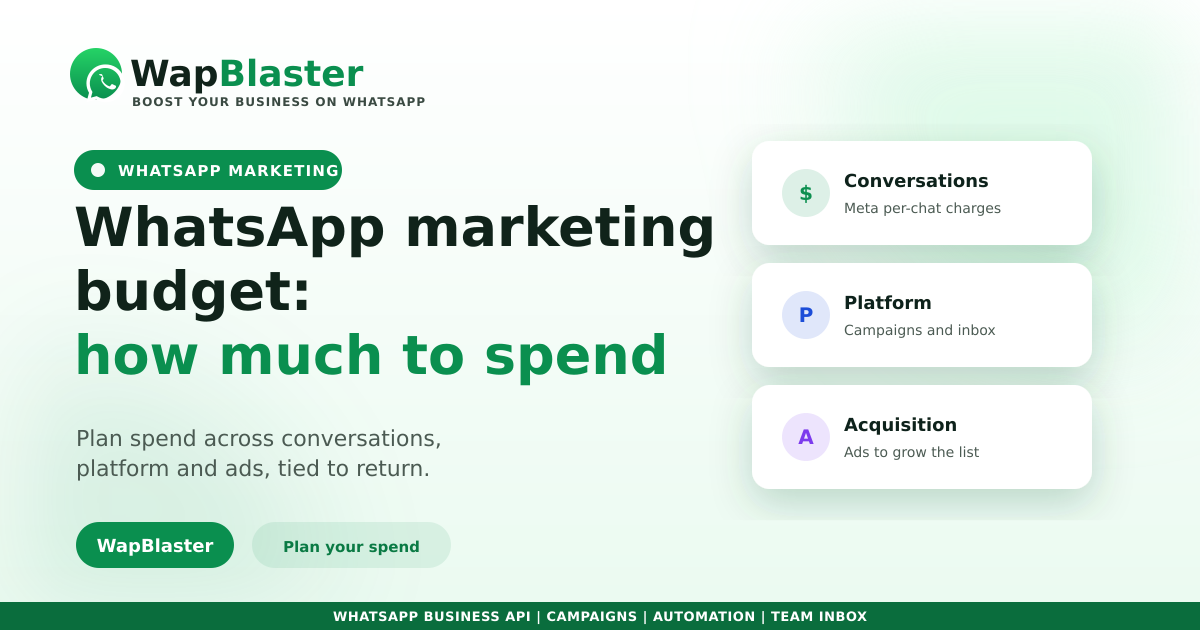
Your spend breaks into three buckets, and most teams only think about one.
- Conversation charges from Meta, billed per conversation, see conversation pricing.
- Platform cost for the software that runs campaigns, automation and inbox.
- Acquisition such as click-to-WhatsApp ads to grow your list.
Start from outcomes, not inputs
Budget backward from a goal. Decide what a conversation or sale is worth, estimate volumes, and let your target return set the ceiling. This beats picking an arbitrary monthly figure.
Start small and scale what works
Begin with the flows that reliably pay back, then expand.
- Fund high-return flows first, like cart recovery and reminders.
- Measure cost per outcome, not just spend.
- Reinvest into the campaigns that prove their return.
Keep costs efficient
Tight targeting and automation lower your true cost per outcome. Segment so you are not paying to message people a campaign does not suit, and automate to resolve in fewer paid conversations.
Frequently asked questions
How much should a business spend on WhatsApp marketing?
There is no fixed figure. Budget backward from outcomes: decide what a conversation or sale is worth, estimate volumes, and let your target return set the ceiling. Start small, prove the return, then scale what works.
What costs make up a WhatsApp marketing budget?
Three things: Meta's per-conversation charges, the platform cost for software that runs campaigns and automation, and acquisition spend such as click-to-WhatsApp ads to grow your opted-in list. Most teams forget the last two.
How do I keep WhatsApp costs low?
Target tightly so you only message people a campaign suits, automate to resolve in fewer paid conversations, and encourage cheaper customer-initiated chats. Measure cost per outcome rather than raw spend, and cut what does not return.
How do I know if my WhatsApp spend is working?
Track return on spend, revenue or value generated versus total cost, including conversations, platform and ads. If a campaign returns more than it costs, scale it; if it does not, fix the targeting and message or stop it.
Plan a budget that pays back. Explore WapBlaster or start free.