

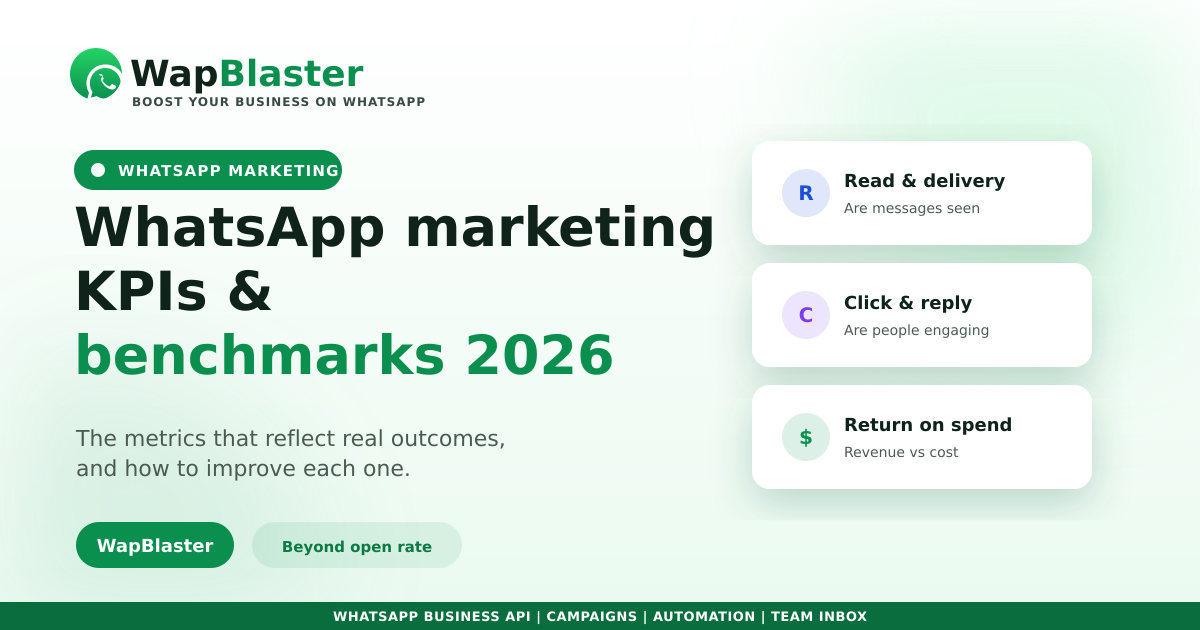
WhatsApp is famous for near-universal open rates, but an open is not a result. To grow the channel you need to track the metrics that reflect real outcomes and compare them against sensible benchmarks. This guide covers the WhatsApp marketing KPIs that matter in 2026, what good looks like, and how to move each number.
The KPIs that actually matter
Look past vanity metrics to the ones tied to revenue.
- Delivery and read rate: are messages landing and being seen.
- Click-through and reply rate: are people engaging.
- Conversion rate: the share who take the goal action.
- Return on WhatsApp spend: revenue versus messaging cost.
Realistic benchmarks
WhatsApp read rates are very high, but click, reply and conversion vary widely by segment, offer and relevance. Rather than chase a universal number, set your own baseline and improve against it, context matters far more than a headline figure.
Why revenue KPIs beat open rate
A 98% open rate with low conversion means your message is seen but not compelling. Tracking conversion and return keeps you focused on outcomes, and makes the business case for the channel, as covered in our ROI guide.
How to improve each metric
- Low read: improve list quality and consent.
- Low click/reply: sharpen relevance, offer and CTA.
- Low conversion: reduce friction with in-chat payment and clear next steps.
- Low return: target tightly and watch cost per outcome versus pricing.
Measure consistently
Pick your core KPIs, track them per campaign over time in your analytics, and let the trend, not a single send, guide decisions.
Frequently asked questions
What are the key WhatsApp marketing KPIs?
Delivery and read rate, click-through and reply rate, conversion rate, and return on WhatsApp spend (revenue versus messaging cost). These reflect real outcomes, unlike open rate alone, which is high for almost everyone.
What is a good WhatsApp open or read rate?
Read rates on WhatsApp are typically very high, but click, reply and conversion vary widely by segment, offer and relevance. Rather than chase a universal benchmark, set your own baseline and improve against it over time.
Why track conversion instead of open rate?
Because a near-universal open rate with low conversion means the message is seen but not compelling. Tracking conversion and return on spend keeps you focused on outcomes and makes the business case for the channel.
How do I improve my WhatsApp conversion rate?
Sharpen relevance with tight segmentation, lead with a clear value and single CTA, and reduce friction with in-chat payment and obvious next steps. Then measure consistently and refine what works.
Measure what matters. See WapBlaster marketing tools or start free.