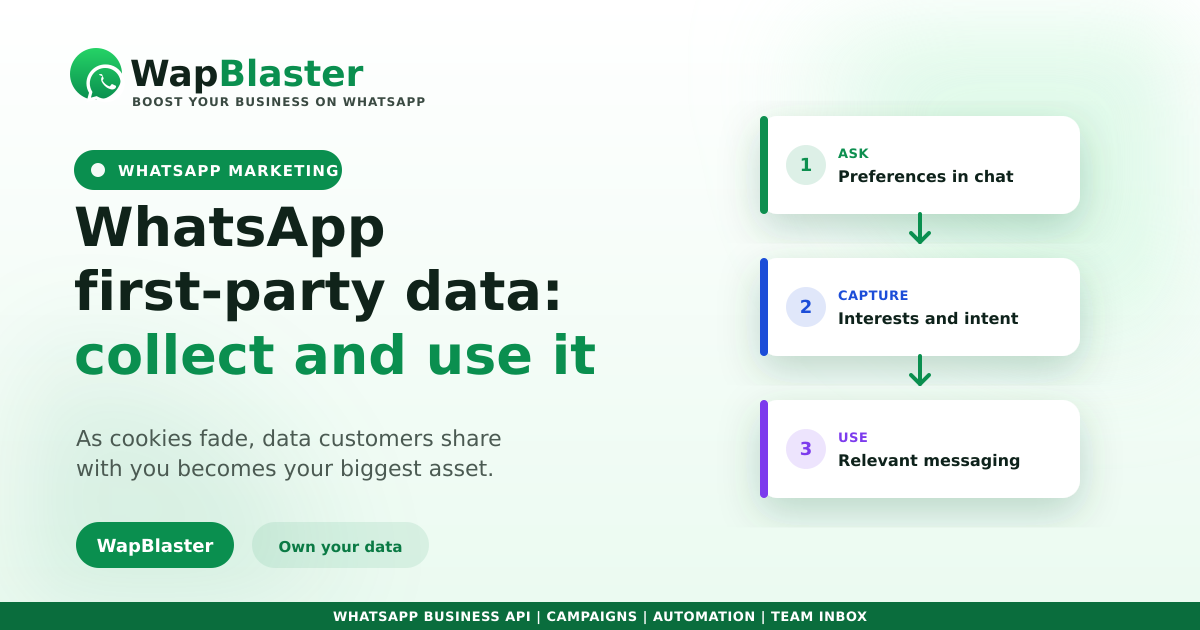
With third-party cookies disappearing, the data customers share directly with you, first-party data, has become one of your most valuable assets. WhatsApp is a natural place to collect it, because every interaction is a consented, two-way conversation. Here is how to gather and use first-party data well in 2026.
Why first-party data matters now
Data you own, with consent, is more accurate, durable and privacy-friendly than borrowed data.
- It does not disappear when cookies and trackers do.
- It is collected with clear consent, so it is compliant.
- It powers genuinely relevant messaging.
How WhatsApp helps you collect it
Conversations naturally surface preferences, intent and context, if you capture them.
- Use in-chat forms and flows to ask preferences politely.
- Capture interests from the products and questions people engage with.
- Record consent and choices against each contact.
Turn data into relevance
Collected data only pays off when you use it. Feed it into segments and personalised messages so each contact hears about what matters to them. This is what lifts engagement and conversion.
Handle it responsibly
First-party data is a trust exchange. Collect only what you will use, be transparent about why, and follow privacy and policy rules. Respect for data is what keeps customers willing to share it.
Frequently asked questions
What is first-party data on WhatsApp?
It is information customers share directly with you through conversations and consented forms, such as preferences, interests and contact details. Because it is given with permission, it is accurate, durable and privacy-friendly, unlike third-party tracking data.
Why is first-party data important in 2026?
As third-party cookies and trackers fade, borrowed data is becoming unreliable. First-party data you collect with consent does not disappear, stays compliant, and powers the relevant, personalised messaging that drives engagement and sales.
How do I collect first-party data on WhatsApp?
Use in-chat forms and flows to ask preferences politely, capture interests from what people engage with, and record consent and choices against each contact. Always explain why you are asking and collect only what you will actually use.
How do I use first-party data effectively?
Feed it into segmentation and personalisation so each contact hears about what is relevant to them. Well-used data lifts engagement and conversion, while respecting privacy and policy keeps customers willing to keep sharing it.
Own your customer data. Explore WapBlaster or start free.