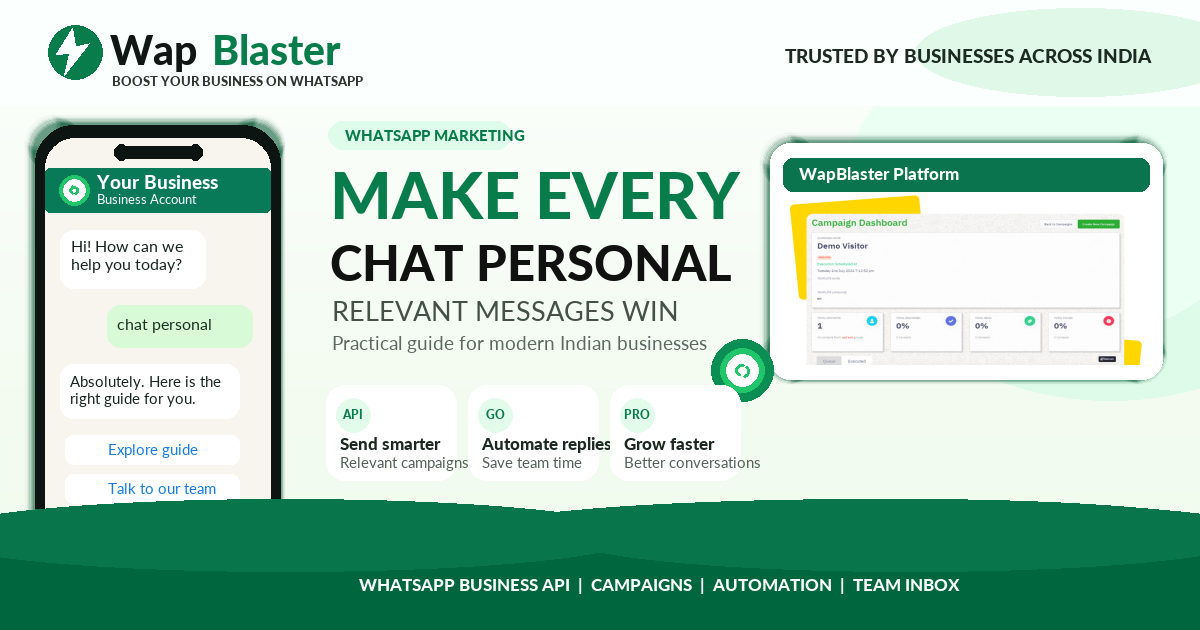
Generic blasts feel like spam; personalised messages feel like a conversation. Using dynamic variables, you can tailor every WhatsApp message at scale and see higher engagement. Here is how to personalise the right way in 2026.
Why personalization works
A message with the customer name, their order or a relevant detail gets more attention and replies. It signals the message is meant for them, not a mass send.
What you can personalize
- Customer name and location.
- Order number, status and tracking link.
- Appointment date and time.
- Recommended products based on past activity.
How to personalize at scale
- Store useful fields against each contact, such as name and last order.
- Use approved templates with variable placeholders.
- Map each variable to the right contact field.
- Test with a small group before the full send.
- Review replies to refine your messaging.
Best practices
Only use data the customer expects you to have, keep it accurate, and never overdo it. Relevant beats clever every time.
How WapBlaster helps
WapBlaster supports custom fields and template variables so every message is personalised automatically. Boost engagement on the WapBlaster platform.
Building a data foundation for personalization
Personalization is only as good as the data behind it, so start by capturing the right fields against each contact: name, location, purchase or booking history, interests and preferred language. The more clean, structured detail you hold, the more relevant every message can be. This does not mean collecting everything, only what genuinely helps you serve the customer better. A solid data foundation turns personalization from just inserting a first name into truly tailored messaging that reflects who the customer is and what they have done with you.
Personalization beyond the first name
Dropping in a name is the shallowest form of personalization and customers see through it. The real gains come from context: referencing a customer's recent order, reminding them about an upcoming appointment, recommending products that complement what they bought, or tailoring an offer to their location or past behaviour. This kind of relevance signals that the message is genuinely for them, which lifts engagement and conversion far more than a name ever could. The aim is for each message to feel like it was written for that one person.
Getting personalization right at scale
The challenge is doing this for thousands of contacts without manual effort, which is where template variables and custom fields come in. Map each variable to the right contact field, test with a small group to catch any mismatches before the full send, and keep your data accurate so you never address someone by the wrong name or a stale detail. Use only data the customer would expect you to have, and never overdo it, over-personalization can feel intrusive. Done with care, variable-driven personalization delivers one-to-one relevance across a whole audience automatically.
Frequently asked questions
What is WhatsApp message personalization?
Using dynamic variables to tailor each message with details like the customer name, order number or appointment time, at scale.
Does personalization improve results?
Yes. Personalised, relevant messages get higher open and reply rates and far fewer blocks than generic blasts.
What data can I safely personalize with?
Only data the customer expects you to have, such as their name, order or booking details. Keep it accurate and never overdo it.