

Message frequency quietly makes or breaks a WhatsApp channel. Send too rarely and customers forget they opted in; send too often and they mute, block or report you, which also damages your number's quality rating. There is no single magic number, but there is a right approach. This guide covers how to find the frequency that keeps subscribers engaged rather than annoyed.
Why frequency matters so much
Unlike email, WhatsApp feels personal, so an unwanted message is more intrusive, and the reaction is faster and harsher.
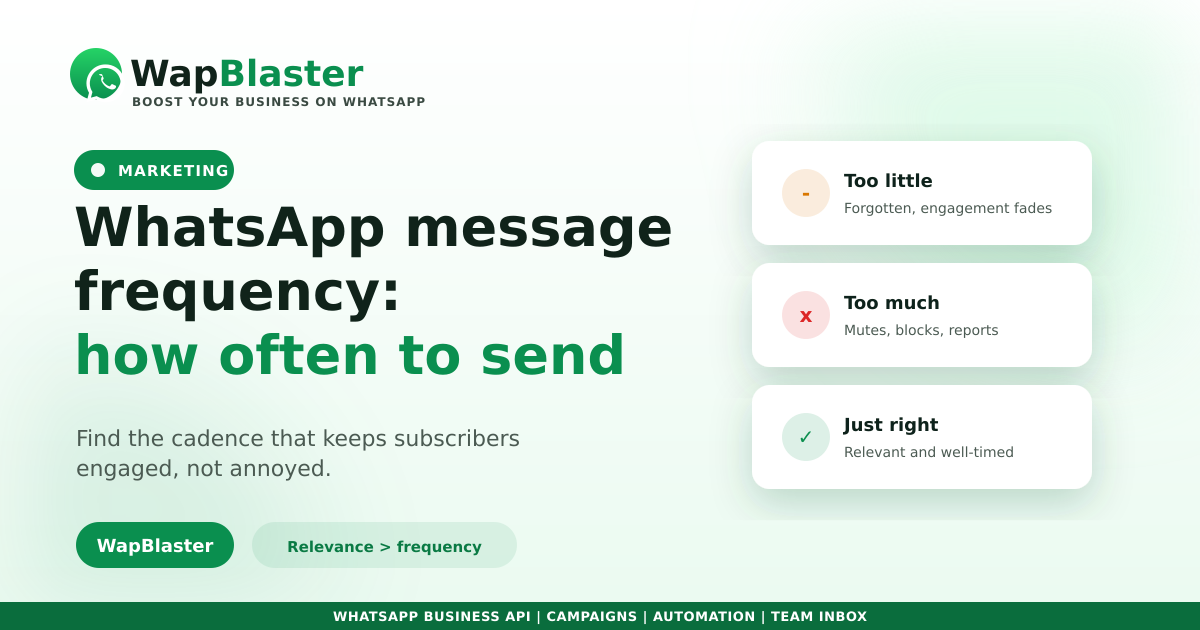
- Too little: customers forget you and engagement fades.
- Too much: mutes, blocks and reports, and a falling quality rating.
- Blocks and reports directly threaten your ability to send at all.
Relevance beats frequency
The real question is not "how often" but "how relevant". A highly relevant message is welcome even weekly; an irrelevant one is spam even monthly. Segment your audience and send each group only what matters to them, as covered in your targeting approach.
Match frequency to message type
Different messages have different tolerances.
- Transactional (orders, reminders): expected, send as needed.
- Useful updates and service: welcome when relevant.
- Pure promotions: the most limited, use sparingly.
Let the data guide you
Watch the signals your audience gives you. Rising opt-outs, mutes or falling read rates mean you are sending too much or too irrelevantly. Use your analytics to find the cadence where engagement stays healthy, and revisit it as your list grows. Timing matters too, so pair frequency with good send times.
Protect consent and your number
Always send to opted-in contacts, make opting out easy, and respect it instantly, in line with policy. Sensible frequency protects your number's quality rating, which protects your reach. When customers go quiet, a considered re-engagement beats simply messaging more.
Frequently asked questions
How often should I send WhatsApp marketing messages?
There is no single magic number; it depends on relevance and message type. Highly relevant messages are welcome even weekly, while irrelevant ones feel like spam even monthly. Segment your audience and let engagement data guide the cadence.
Does messaging too often hurt my WhatsApp number?
Yes. Over-messaging leads to mutes, blocks and reports, which lower your number's quality rating and can restrict how much you are allowed to send. Sensible, relevant frequency protects both engagement and reach.
Is relevance more important than frequency?
Yes. A relevant, well-targeted message is welcome even at higher frequency, while an irrelevant one annoys at any frequency. Segmenting your audience so each group gets only what matters is the key to sending more without losing subscribers.
How do I know if I am messaging too much?
Watch for rising opt-outs, mutes and falling read rates in your analytics, those are the clearest signals. If they climb, reduce frequency or improve relevance, and re-engage quiet contacts thoughtfully rather than simply sending more.
Message smarter, not more. See WapBlaster marketing tools or start free.