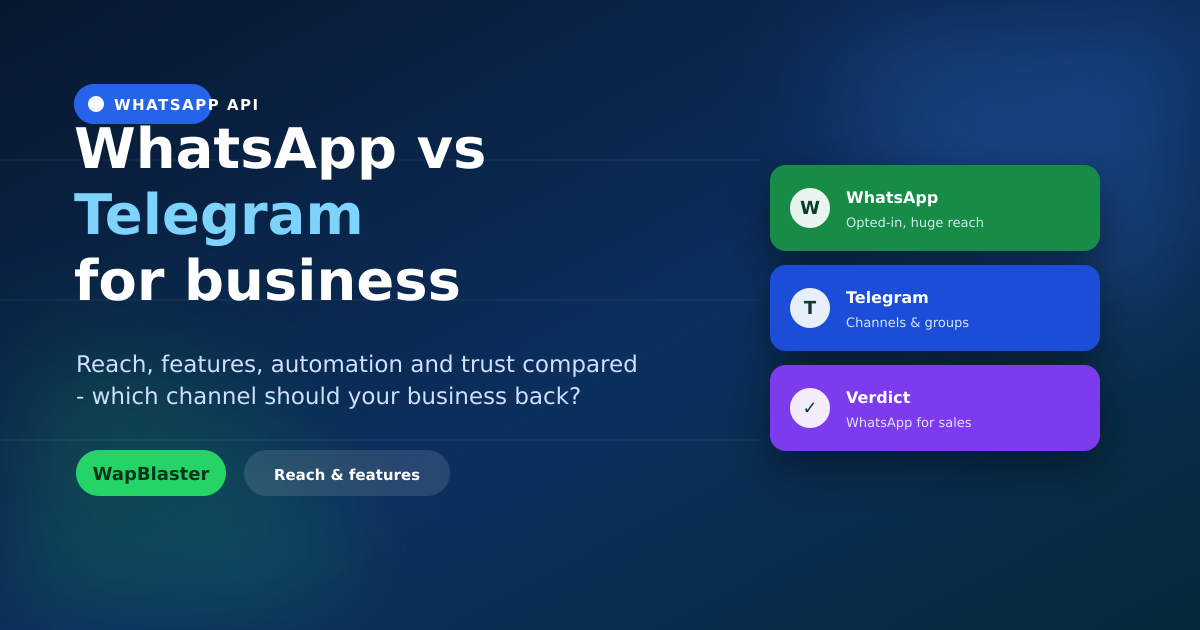
WhatsApp and Telegram are both popular messaging apps with business features, but they are built for different things. Telegram excels at broadcast channels and communities; WhatsApp excels at one-to-one, opted-in commercial conversations. This guide compares them honestly so you back the right channel for your goals.
Reach and audience
WhatsApp has over two billion users and is the default messaging app in markets like India, Brazil and much of Europe and Africa. Telegram is large and growing but smaller, and its users skew toward communities, crypto and interest groups.
- WhatsApp: near-universal reach, especially for commerce.
- Telegram: strong for public channels and large groups.
- For reaching customers to buy, WhatsApp usually wins.
How businesses use each
Telegram is often used for one-to-many broadcasts through public channels, where anyone can join. WhatsApp, through the Business API, is built for permission-based, personal conversations: orders, support, reminders and sales.
Automation and commerce features
WhatsApp offers a mature commercial toolset: approved templates, catalogs, a chatbot, a shared inbox and conversation-based pricing. Telegram has flexible bots and is developer-friendly, but lacks WhatsApp's built-in commerce and opt-in framework for direct customer selling.
Trust and opt-in
WhatsApp's permission-first model means customers expect and trust business messages there, which lifts engagement. Telegram channels rely on people discovering and joining, which suits content and community more than transactional messaging.
The verdict
For building communities and broadcasting content, Telegram is a fine choice. For reaching customers to sell, support and retain, WhatsApp's reach, opt-in trust and commerce tools make it the stronger business channel for most companies. Many brands use Telegram for community and WhatsApp for the customer relationship. Compare with other channels in our WhatsApp vs SMS vs email guide.
Frequently asked questions
Is WhatsApp or Telegram better for business?
For reaching customers to sell, support and retain, WhatsApp is usually better thanks to its huge opted-in reach and commerce tools. Telegram is better for public channels and large communities. Many businesses use both for different purposes.
What is the main difference for business use?
Telegram is built around one-to-many public channels and groups, while WhatsApp is built for permission-based, one-to-one commercial conversations like orders, support and reminders through its Business API.
Does Telegram have an equivalent to the WhatsApp Business API?
Telegram offers flexible bots and is developer-friendly, but it lacks WhatsApp's built-in commerce features, approved-template system and opt-in framework designed for direct customer selling and support.
Can I use both WhatsApp and Telegram?
Yes. Many brands use Telegram for community and content broadcasting and WhatsApp for the transactional customer relationship. Choose based on the goal of each message rather than picking only one.
Back the channel that sells. Explore WapBlaster's WhatsApp API or start free.