A high open rate means nothing if the message does not earn a reply or a click. The difference is structure: a clear value, one call to action and the right tone. Here are WhatsApp message template examples by use case, along with the principles that make them convert and keep them Meta-approved.
What makes a template convert
Across use cases, the winners share a few traits.
- Lead with a clear, relevant value in the first line.
- One obvious call to action, not three.
- Personalisation with name and context using variables.
- A friendly, non-pushy tone.
Examples by use case
Adapt these patterns to your brand and category.
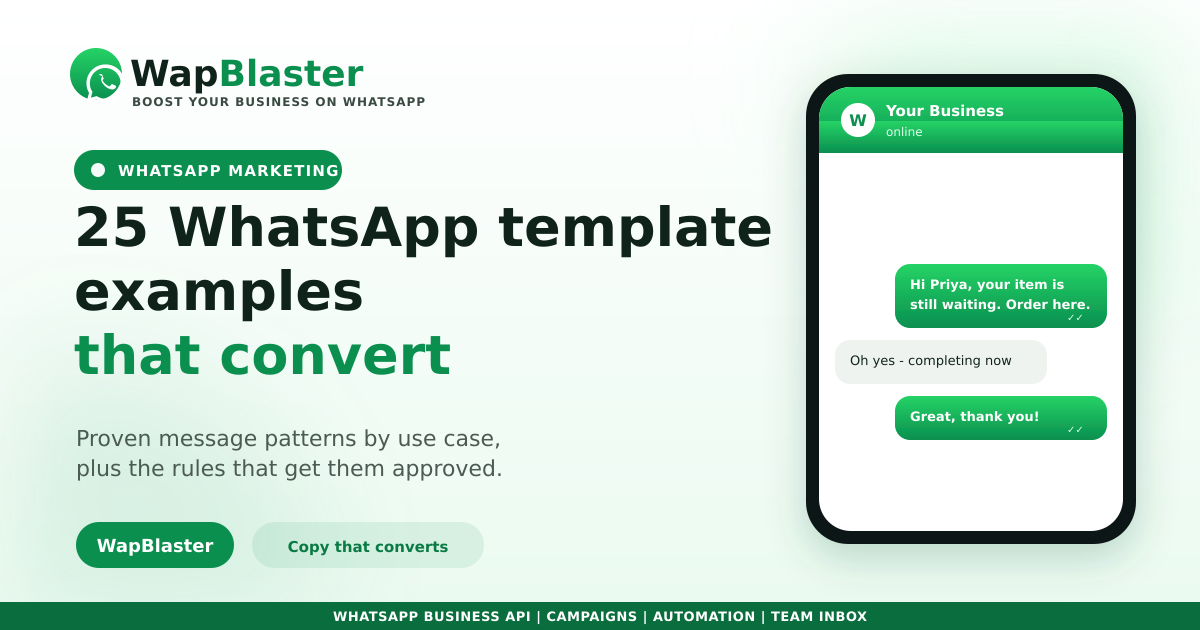
- Abandoned cart: "Hi {name}, your {product} is still waiting. Complete your order here."
- Order update: "Good news {name}, your order {id} has shipped. Track it here."
- Offer: "{name}, early access to our sale is live for 24 hours. Shop now."
- Reminder: "Your appointment is tomorrow at {time}. Reply to reschedule."
- Re-engagement: "We miss you {name}, here is something new we think you will like."
Match the category
Each template must use the correct category, marketing, utility or authentication, to be approved and priced correctly. See our template approval guide for the rules and examples.
Test and refine
Templates are not set-and-forget. Compare variations, keep what earns replies, and drop what does not, using your analytics to guide decisions.
Stay compliant
Send approved templates to opted-in contacts, keep frequency sensible, and honour opt-outs per policy, so your templates keep performing and your number stays healthy.
Frequently asked questions
What makes a WhatsApp template convert?
A clear, relevant value in the first line, a single obvious call to action, personalisation with the customer's name and context, and a friendly, non-pushy tone. Multiple CTAs and generic copy are what kill conversion.
Do you have WhatsApp template examples by use case?
Yes. Proven patterns include abandoned cart, order and shipping updates, limited-time offers, appointment reminders and re-engagement messages. Adapt each to your brand, keep one CTA, and personalise with variables.
Why does the template category matter?
Each template must use the correct category, marketing, utility or authentication, to be approved by Meta and priced correctly. The wrong category causes rejection or reclassification, so match it to the message's true purpose.
How do I improve template performance?
Test variations of copy, offer and CTA, keep what earns the most replies and conversions, and drop what does not, using analytics to guide you. Keep messages opted-in, relevant and sensibly timed to protect your reach.
Send templates that convert. See the template guide or start with WapBlaster.