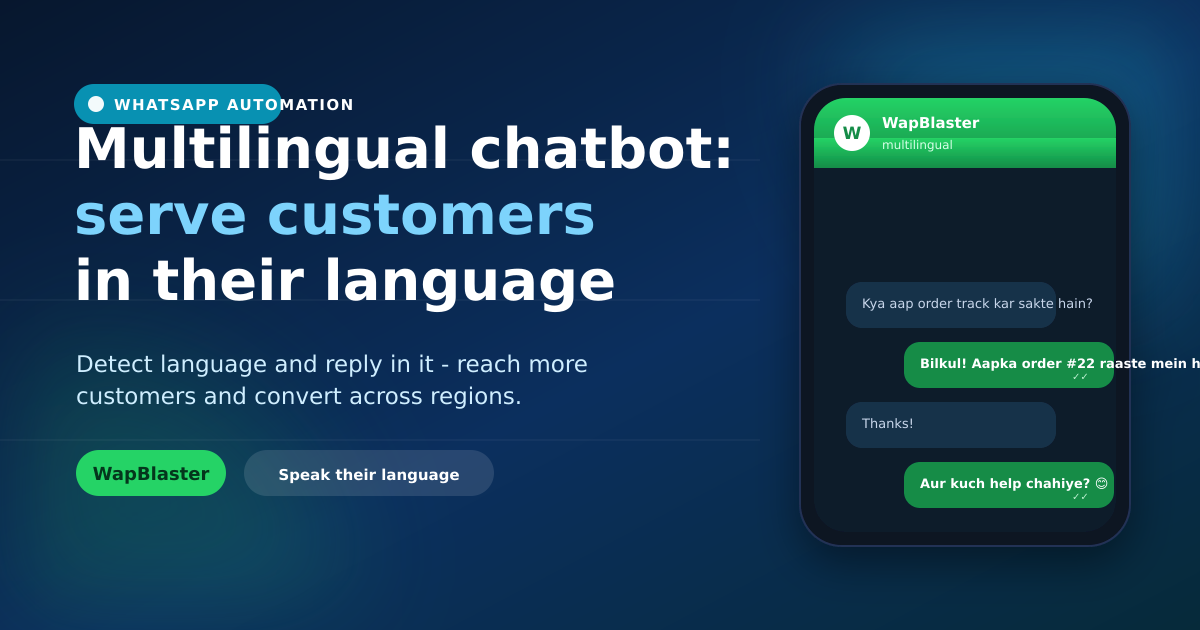
People trust and buy more when a business speaks their language, literally. In a country as linguistically diverse as India, or any global market, a multilingual WhatsApp chatbot removes a real barrier to conversion. This guide explains how multilingual bots work and how to use them to reach and convert more customers.
Why language matters for conversion
A customer who receives help in their preferred language understands better, trusts more, and completes more actions.
- Higher comprehension means fewer drop-offs.
- Regional language builds trust and comfort.
- You reach customers an English-only bot would lose.
How a multilingual chatbot works
A multilingual chatbot detects the language a customer writes in, or lets them pick, and then continues the conversation in that language. Flows, menus and responses are prepared per language so the whole journey feels native.
Set it up well
- Offer a clear language choice up front, or auto-detect.
- Localise the whole flow, not just the greeting.
- Keep tone and examples culturally appropriate.
- Ensure a human agent can continue in the same language when needed.
For campaigns, our multilingual campaigns guide covers templates and localisation QA.
Common pitfalls to avoid
Do not machine-translate blindly, review for accuracy and tone. Do not translate the greeting but leave the rest in English. And make sure your team inbox can route conversations to agents who speak the language.
The payoff
Serving customers in their language widens your reachable market, lifts engagement and conversion, and builds loyalty, often with the same effort as running one language well, thanks to automation.
Frequently asked questions
How does a multilingual WhatsApp chatbot work?
It detects the language a customer writes in, or lets them choose, then continues the entire conversation in that language using flows, menus and responses prepared per language, so the journey feels native.
Does replying in a customer's language improve conversion?
Yes. Customers understand better, trust more and complete more actions when served in their preferred language. In diverse markets, it also reaches customers an English-only bot would lose entirely.
Should I auto-detect language or let customers choose?
Either works, and many bots do both: auto-detect from the customer's first message, with an option to switch. The key is to localise the whole flow, not just the greeting, and keep tone culturally appropriate.
What is the biggest mistake with multilingual bots?
Relying on blind machine translation and localising only the greeting. Review translations for accuracy and tone, localise the full journey, and ensure agents who speak the language can take over when needed.
Speak your customers' language. Build with the WapBlaster chatbot or start free.