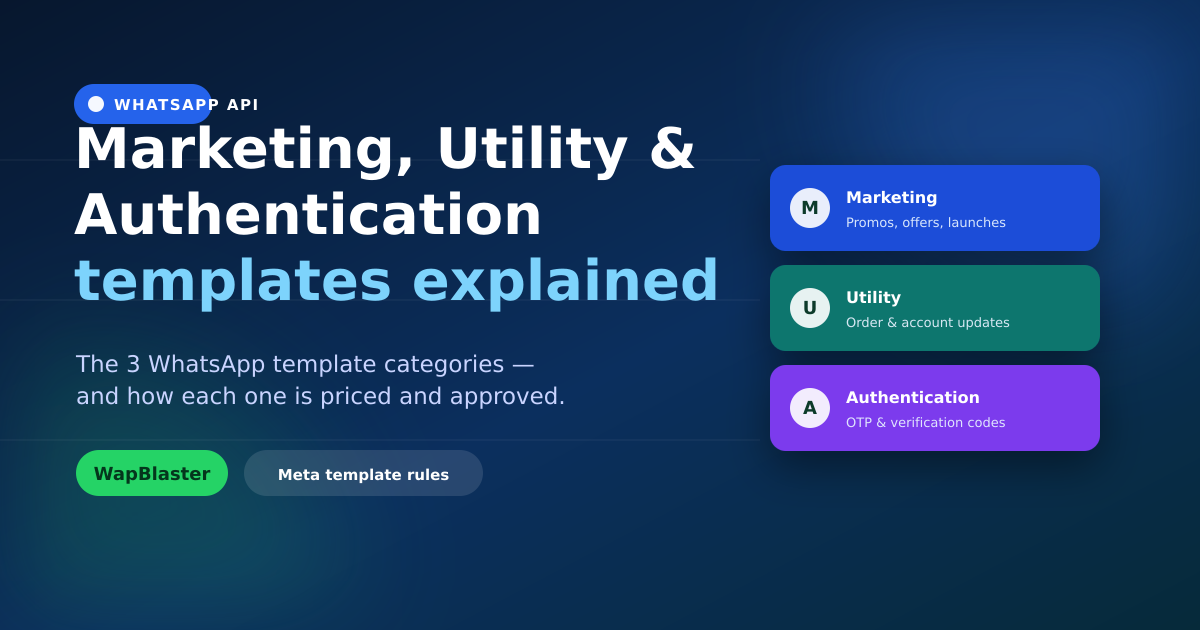
Every business-initiated WhatsApp message is sent using an approved template, and WhatsApp sorts those templates into three categories: Marketing, Utility and Authentication. The category you choose affects how the message is approved, how it is priced, and whether it is even allowed for your use case. Getting it wrong leads to rejected templates, unexpected costs, or messages that hurt your quality rating.
This guide explains each category in plain language and helps you choose correctly the first time.
Why template categories exist
WhatsApp uses categories to keep the channel useful and to price messages fairly. Promotional content is treated differently from a one-time password or an order update. When you submit a template in WapBlaster, you choose a category, and Meta reviews the content against that category's rules. If the content does not match, Meta may reject it or reclassify it.
Marketing templates
Marketing templates cover anything promotional: offers, product launches, newsletters, event invites, re-engagement and upsell messages. They are the most flexible in content but the most scrutinised, and they require a clear opt-in from the recipient.
- Use for: promotions, announcements, seasonal campaigns, cross-sell.
- Needs: explicit opt-in and a relevant reason to message.
- Watch: over-messaging marketing content is the fastest way to lower your quality rating.
For the rules that keep marketing sends healthy, see our WhatsApp marketing compliance guide and opt-in tactics.
Utility templates
Utility templates relate to a specific transaction or account event the customer expects: order confirmations, shipping updates, appointment reminders, payment receipts and account alerts. They must reference a real, agreed action — not slip in promotion.
- Use for: order, delivery, booking and account updates.
- Needs: a genuine transactional trigger tied to the customer's activity.
- Benefit: high open rates because customers want these updates.
Authentication templates
Authentication templates deliver one-time passwords and verification codes. They follow a strict, standardised format and should never contain marketing. They are ideal for login, signup and transaction verification flows.
How categories affect pricing
Meta's conversation-based pricing charges differently by category and market, and the categories have shifted over time. Rather than memorise numbers that change, understand the principle: marketing conversations typically cost more than utility, and some utility or service windows may be free or discounted. For the current model and how charges are triggered, read our WhatsApp conversation pricing explainer.
Choosing the right category in WapBlaster
When you create a template in WapBlaster, match the category to the message's true purpose. A shipping update is Utility; a discount code is Marketing; an OTP is Authentication. Do not label a promotion as Utility to save money — Meta will catch it, reject or reclassify the template, and repeated attempts damage your standing. For formatting, variables and approval tips, use our template approval guide.
Frequently asked questions
What are the three WhatsApp template categories?
Marketing (promotional content), Utility (transaction and account updates the customer expects), and Authentication (one-time passwords and verification codes). Each has its own rules and pricing.
Can I send a promotion using a Utility template?
No. Utility templates must relate to a specific transaction or account event. Adding promotional content risks rejection or reclassification and can hurt your quality rating. Use a Marketing template with proper opt-in instead.
Which template category is cheapest?
Utility and authentication conversations are generally priced lower than marketing, and some service messages may be free within certain windows. Because rates change by market, check the current WhatsApp conversation pricing before you plan campaigns.
Do all three categories need opt-in?
You should collect appropriate consent to message customers on WhatsApp for any category. Marketing has the strictest expectation of explicit opt-in, while utility and authentication rely on a genuine transactional relationship.
Send the right template every time. Explore the WhatsApp Business API or start with WapBlaster.