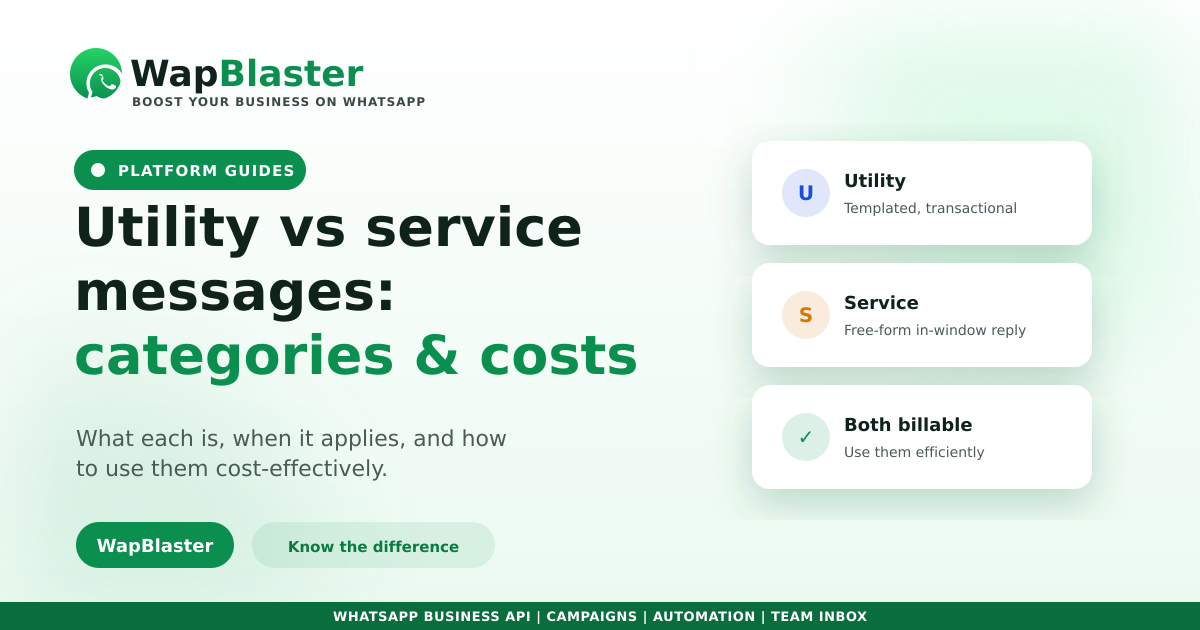
Two WhatsApp message types are easy to confuse, utility and service, and getting them wrong can mean rejected templates or unexpected costs. After the 2026 pricing changes, both are billable inside the customer window, so understanding the difference matters more than ever. This guide clarifies each, when it applies, and how to use them cost-effectively.
What a utility message is
A utility message is a templated, transactional message tied to a specific action or event, an order confirmation, a shipping update, an appointment reminder. It must match an approved utility template.
- Triggered by a transaction or account event.
- Sent as an approved template.
- Now billable, including inside the customer window.
What a service message is
A service message is a free-form reply you send to a customer inside the 24-hour window, typically answering a question or helping with an issue. It is not a template, it is conversational.
The key difference
Utility messages are structured, templated and transaction-triggered; service messages are free-form replies within an open conversation. Choosing the right one, and the right template category, affects both approval and cost, as covered in our categories guide.
What changed with cost
Previously, both could be free inside the customer window. After the 2026 changes, service messages and in-window utility templates are billable per message. That makes efficient use of both a direct budget question.
How to use them cost-effectively
- Consolidate utility updates instead of sending many separate ones.
- Resolve service conversations in fewer messages using automation.
- Use the right category so templates are approved and priced correctly.
- Understand your messaging window so you know what is billable.
Frequently asked questions
What is the difference between utility and service messages?
Utility messages are templated, transactional messages tied to an action, like an order or shipping update, sent as approved templates. Service messages are free-form conversational replies you send inside the 24-hour customer window.
Are utility and service messages billable in 2026?
Yes. After the 2026 pricing changes, both service messages and utility templates sent inside the customer window are billable per message, whereas previously both could be free in-window.
How do I choose the right category?
Match the category to the message's true purpose: utility for transactional, action-tied updates and marketing for promotions, with service being free-form replies. The right category ensures approval and correct pricing.
How do I keep utility and service costs down?
Consolidate multiple utility updates into single messages, use automation to resolve service conversations in fewer replies, choose the correct template category, and understand your messaging window so you always know what is billable.
Message smart, spend less. Explore WapBlaster or start free.