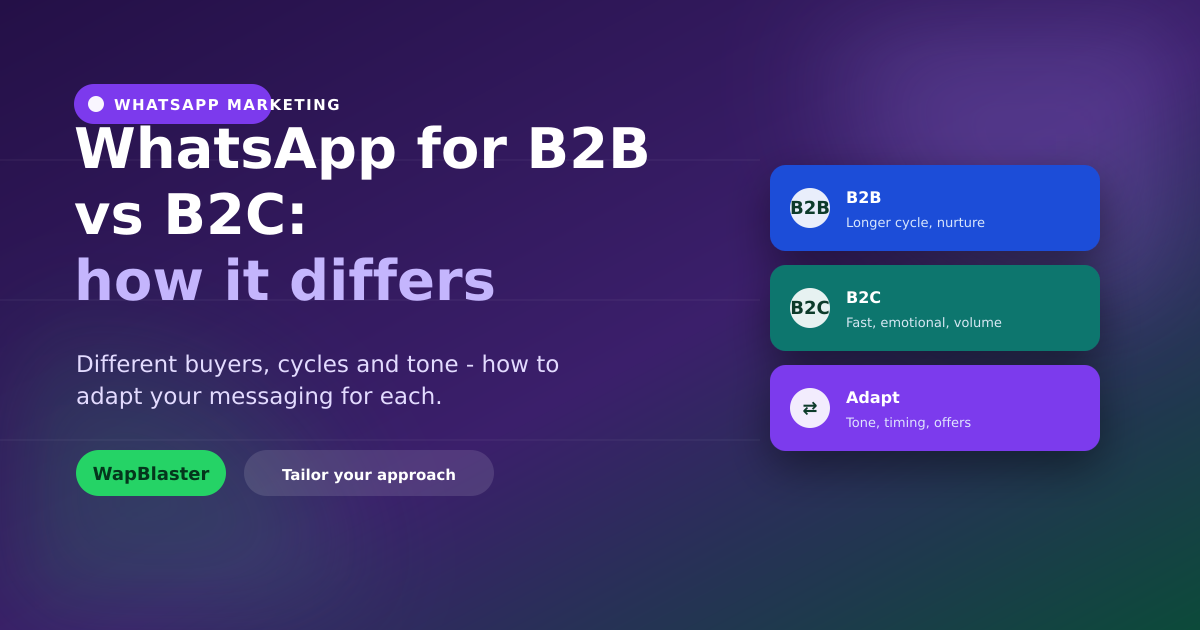
Using the same WhatsApp playbook for B2B and B2C is a common mistake. A business buyer researching a considered purchase behaves nothing like a consumer buying on impulse. This guide breaks down how WhatsApp messaging should differ between B2B and B2C across cycle, tone, content and cadence.
Different buyers, different journeys
B2C purchases are often fast and emotional; B2B purchases are slower, rational and involve multiple people. Your messaging has to match the journey.
- B2C: shorter path, impulse-friendly, high volume.
- B2B: longer cycle, multiple touches, relationship-led.
Tone and content
B2C messaging can be punchy, playful and offer-led. B2B messaging should be helpful and credible: case studies, answers, and useful insight that build trust over time. Our B2B guide goes deeper on shortening long cycles.
Timing and cadence
B2C offers work around impulse moments, weekends, launches, sales, and can be more frequent when relevant. B2B follow-up is patient and spaced, keeping you present across a decision that may take weeks without nagging.
Offers and calls to action
- B2C: discounts, limited-time deals, one-tap buy.
- B2B: demos, consultations, proposals and trials.
What stays the same
Both need opt-in, relevance, fast response and a clear path to a human. Both benefit from a chatbot to qualify and a shared inbox to manage conversations. The principles are shared; the execution differs. Personalise either way, as covered in our copywriting guide.
Frequently asked questions
How does WhatsApp messaging differ for B2B and B2C?
B2C messaging is faster, more emotional and offer-led for impulse buyers, while B2B messaging is patient, credible and relationship-led for longer, multi-person decisions. Tone, timing, content and calls to action all adapt to the buyer.
Can I use the same WhatsApp strategy for both?
The principles, opt-in, relevance, fast response and human handoff, are shared, but execution should differ. B2C leans on offers and speed; B2B leans on nurturing, insight and consultations over a longer cycle.
What content works for B2B on WhatsApp?
Helpful, credibility-building content: case studies, answers to specific questions, useful insight, and invitations to demos or consultations. The goal is to build trust across a considered decision rather than push a quick sale.
Is WhatsApp better for B2B or B2C?
It works for both. B2C benefits from high-volume, offer-led messaging and fast conversion, while B2B benefits from personal, patient follow-up that keeps deals moving. The right approach depends on your buyer.
Tailor your approach. Explore WapBlaster or start free.