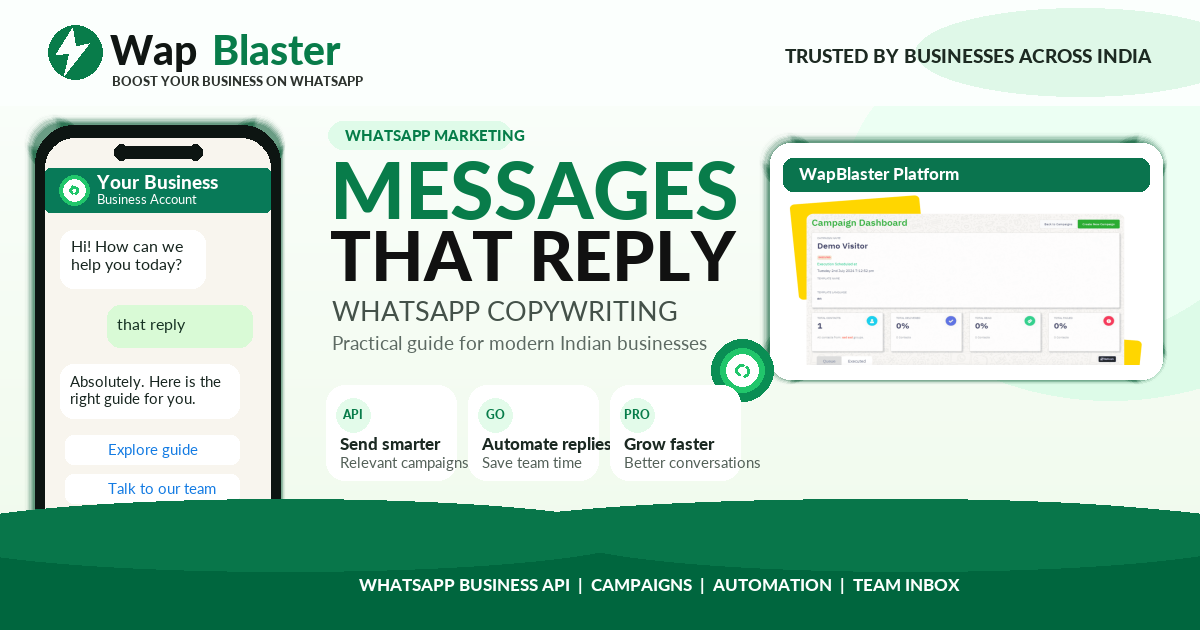
The best WhatsApp strategy fails if the message itself is dull. On a channel this personal and this immediate, copy is everything. This 2026 guide covers the copywriting rules, structure and examples that turn WhatsApp messages from ignored broadcasts into conversations that get replies and drive action.
Why WhatsApp copy is different
WhatsApp is not email and not an ad. It is a personal channel where people expect messages to feel one-to-one, brief and human. Long, formal, salesy copy that might survive in email feels intrusive here. The winning style is conversational, concise and specific, as if a helpful person messaged them directly. Getting this tone right is the difference between a reply and a block.
The anatomy of a high-reply message
- Open with relevance. Lead with why this matters to them, ideally using their name or a specific detail.
- Keep it short. A few lines, one idea. Break long thoughts into separate bubbles.
- Make the value obvious. Say clearly what they get or need to do.
- End with one clear call to action. A single next step, ideally a button or a simple question.
Copywriting rules that lift replies
- Write like you talk; avoid corporate jargon.
- Personalise with real, relevant details, not just a name.
- Ask a question, questions invite replies far more than statements.
- Use buttons and quick replies to make responding effortless.
- Create gentle urgency without pressure or hype.
- Respect the reader's time; every word should earn its place.
Examples: weak vs strong
Weak: a long, formal paragraph announcing a sale with no personalisation and a vague link. Strong: "Hi {{name}}, the jacket you looked at is back in your size and on sale till Friday, want me to hold one for you?" The strong version is short, personal, specific, and ends with an easy yes/no question that invites an instant reply.
Writing for each message type
Match tone to purpose. Transactional updates should be clear and reassuring. Promotional messages should be benefit-led and time-bound with an easy opt-out. Re-engagement messages should feel warm and low-pressure. Support replies should be empathetic and solution-focused. The same brand voice runs through all of them, but the emphasis shifts with the job the message is doing.
Common copywriting mistakes
- Walls of text that are hard to read on a phone.
- Generic blasts with no personalisation.
- Burying the point or the call to action.
- Multiple competing asks in one message.
- Hype, all-caps and excessive emojis that read as spam.
- No easy way to reply or opt out.
How WapBlaster helps
WapBlaster supports personalised templates with variables and buttons, so you can write once and send relevant, reply-friendly messages at scale. Write better messages on the WapBlaster platform.
Frequently asked questions
How long should a WhatsApp message be?
Short, usually a few lines built around one idea and one clear call to action. Break longer thoughts into separate bubbles rather than one long block.
How do I get more replies on WhatsApp?
Personalise with relevant details, keep it conversational, ask a question, and make responding effortless with buttons or a simple yes/no ask.
Should I use emojis in business WhatsApp messages?
A few, used naturally, can add warmth. Excessive emojis, all-caps and hype read as spam and hurt both engagement and your quality rating.
What is the biggest WhatsApp copywriting mistake?
Long, generic, formal messages with no personalisation and a buried call to action. Short, specific, conversational copy wins.