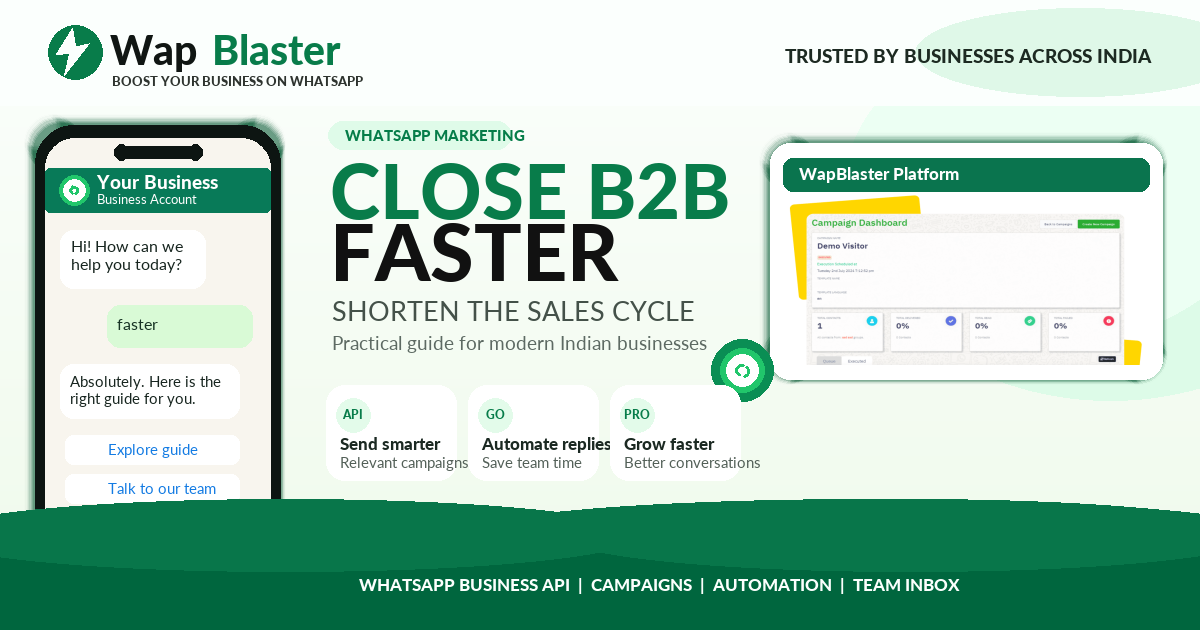
B2B sales cycles are long, multi-stakeholder and email-heavy, and that is exactly why they stall. WhatsApp adds a fast, personal channel that keeps deals moving between the formal touchpoints. This 2026 guide shows how B2B teams use WhatsApp to qualify, nurture and close, without losing professionalism.
Why WhatsApp works for B2B, not just B2C
The assumption that WhatsApp is only for consumer sales is outdated. B2B buyers are people who check WhatsApp all day, and a quick, well-timed message often gets a response when an email sits unread for days. Used professionally, WhatsApp shortens the gaps between meetings, keeps deals warm, and makes your team easy to reach, which in long sales cycles is a real competitive edge.
Qualifying B2B leads faster
When an inbound lead arrives, speed and qualification decide whether it progresses. A WhatsApp chatbot or quick human reply can capture company size, need, budget range and timeline in minutes, then route the qualified lead to the right salesperson with full context. This beats a slow email exchange and ensures your team spends time on genuine opportunities rather than tyre-kickers.
Nurturing long sales cycles
Most B2B deals are lost to silence, not rejection. A light WhatsApp nurture keeps you present between formal steps: sharing a relevant case study, answering a technical question, sending a helpful resource, or simply checking in at the right moment. Because these touches are personal and quick to read, they maintain momentum without the friction of scheduling another call or drafting another long email.
Coordinating multiple stakeholders
B2B deals involve several decision-makers, and coordination is often the bottleneck. WhatsApp makes it easy to keep each stakeholder informed, answer their specific questions quickly, and nudge the process along. A shared team inbox lets your account team collaborate on the same conversations, so nothing falls through the cracks when a deal involves procurement, technical and executive buyers at once.
Keeping it professional and compliant
B2B on WhatsApp still requires professionalism and consent. Get opt-in, keep messages relevant and businesslike, respect working hours, and use it to complement, not replace, formal documentation and contracts. Log conversations against your CRM so the deal history is complete. Done right, WhatsApp feels like responsive, attentive service rather than intrusion.
Closing and onboarding
Near the finish line, WhatsApp helps you close by removing friction, answering last questions instantly, confirming details, and keeping the deal moving to signature. After the close, it smooths onboarding: introductions, next steps and quick support during the critical first weeks. This responsiveness sets the tone for the relationship and improves retention from day one.
How WapBlaster helps
WapBlaster gives B2B teams a shared inbox, chatbots for qualification, and CRM-friendly workflows so deals move faster with full visibility. Accelerate your pipeline on the WapBlaster platform.
Frequently asked questions
Is WhatsApp appropriate for B2B sales?
Yes. Used professionally and with consent, it keeps long, multi-stakeholder deals moving between formal touchpoints and gets faster responses than email alone.
How does WhatsApp shorten B2B sales cycles?
By speeding up qualification, maintaining momentum with light nurturing, coordinating stakeholders quickly and removing friction near the close.
Should WhatsApp replace email and contracts in B2B?
No. It complements them. Keep formal documentation and contracts in place; use WhatsApp for fast, personal communication between those steps.
How do I keep B2B WhatsApp professional?
Get opt-in, keep messages relevant and businesslike, respect working hours, log conversations in your CRM, and use it alongside formal processes.