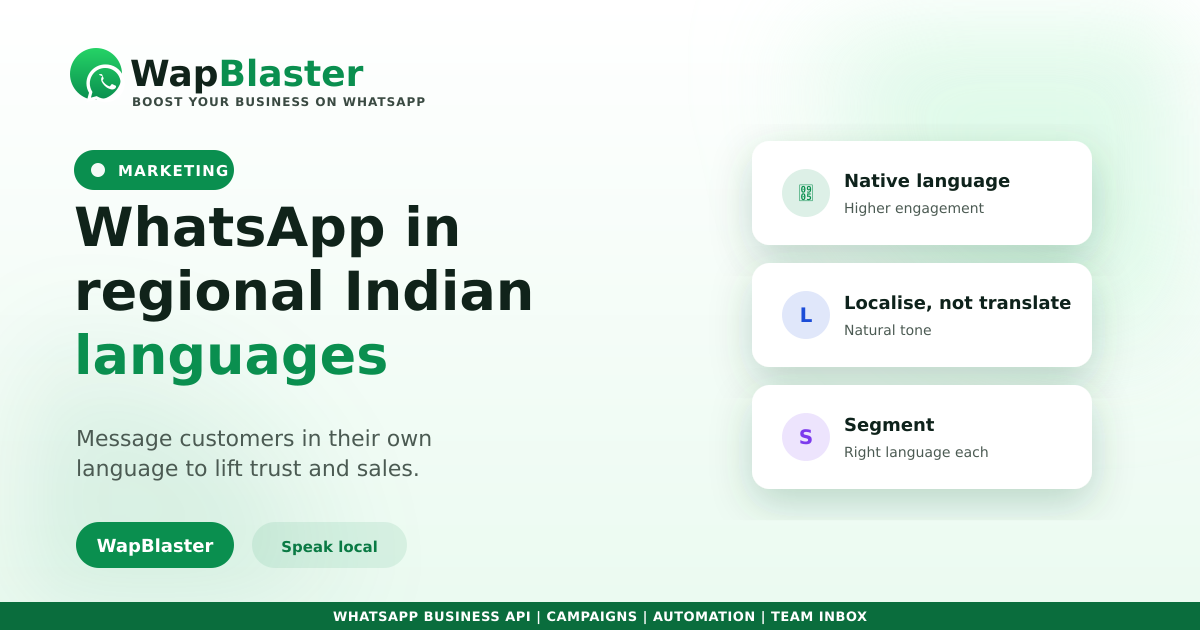
A large share of Indian customers are far more comfortable in Hindi or their regional language than in English. Yet most business messaging is English-first, quietly leaving engagement on the table. On WhatsApp, where the message lands in a personal space, speaking the customer's language is a genuine advantage. Here is how to do regional-language marketing well.
Why language changes results
A message someone fully understands is a message they act on.
- Higher open and reply rates when the language feels familiar.
- More trust, because the brand feels local rather than distant.
- Better conversion, since nothing is lost in translation.
- Wider reach into customers English-only messaging misses.
Do it properly, not literally
Machine-translating an English campaign word for word often reads awkwardly. Treat language as localisation, not just translation.
- Write or review copy with a native speaker so it sounds natural.
- Keep tone and idiom appropriate to the region, not a stiff literal rendering.
- Get templates approved in each language you send.
- Mind script and length, since some languages run longer than English.
Segment by language
Sending Tamil copy to a Hindi speaker is worse than English. Capture language preference at opt-in or infer it from region, then segment so each contact gets the right language. Store the preference in your CRM so every future message respects it.
Automate in-language too
Language should carry through the whole conversation, not just the broadcast. A multilingual chatbot can greet and reply in the customer's language, and route to an agent who speaks it. Consistency across the journey is what builds the trust.
Frequently asked questions
Does messaging in regional languages really improve results?
Yes. Customers engage more with messages in a language they are fully comfortable in, which lifts open rates, replies, trust and conversion, and reaches people that English-only messaging quietly misses.
Can I just machine-translate my English campaigns?
You can start there, but review with a native speaker. Literal translation often reads awkwardly and can undermine trust. Treat it as localisation, matching tone and idiom to the region, not a word-for-word swap.
Do I need templates approved in each language?
Yes. Business-initiated template messages should be approved in each language you send, and you should mind script and length since some languages run longer than the English version.
How do I know which language to send?
Capture language preference at opt-in or infer it from region, store it in your CRM, and segment so each contact receives the right language across both broadcasts and chatbot replies.
Speak your customers' language. Explore WapBlaster or start free.