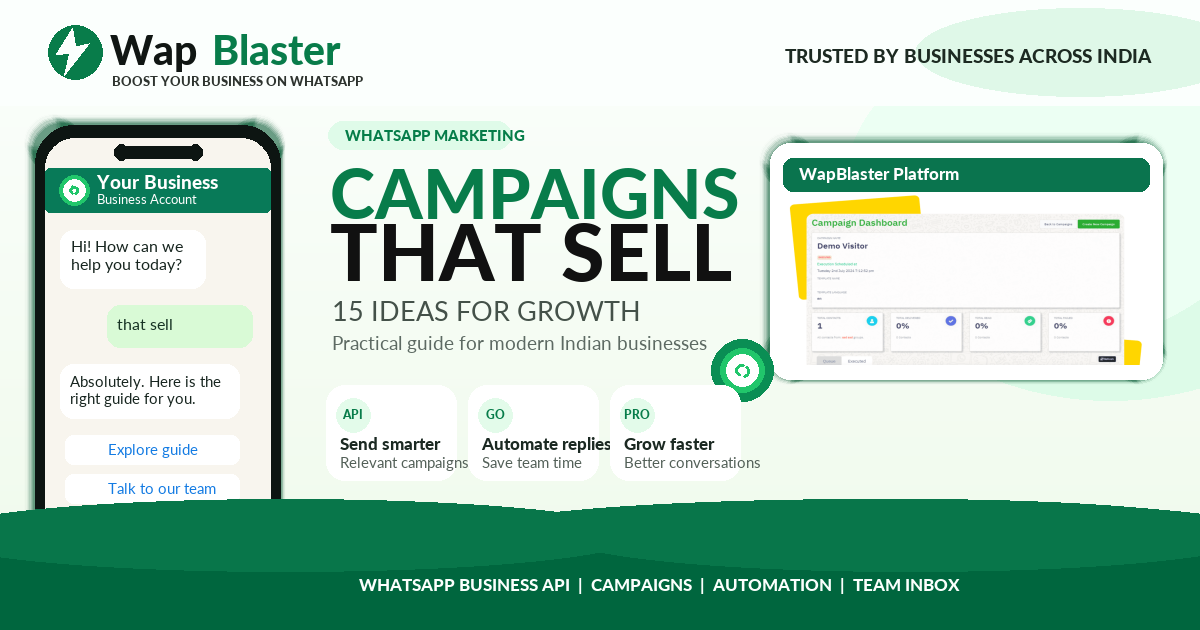
WhatsApp is no longer just a support channel — it is one of the highest-ROI marketing channels available, with open rates that routinely beat email many times over. But blasting the same promo to everyone is a fast route to blocks and unsubscribes. This guide gives you 15 proven WhatsApp marketing campaign ideas for 2026, each with a concrete example and when to use it.
Before you launch: the ground rules
Every campaign below assumes you are following the fundamentals: you use the official WhatsApp Business API, you only message opted-in contacts, you use approved templates for the first message, and you always give an easy way to opt out. Get those right and the ideas below will compound.
1. Welcome series for new subscribers
The moment someone opts in is your highest-intent window. Send a warm welcome, set expectations for what they'll receive, and offer a first-purchase incentive. Example: "Welcome to {{brand}}! You'll get early access to drops and members-only offers. Here's 10% off your first order: WELCOME10."
2. Abandoned cart recovery
Cart abandonment is where WhatsApp shines. A timely, personal nudge recovers revenue that email often misses. Example: "Hi {{name}}, you left {{product}} in your cart. It's still available — complete your order in the next 2 hours and we'll cover shipping."
3. Order and shipping updates that upsell
Transactional messages have near-100% open rates. Add a subtle, relevant recommendation. Keep the core update as a Utility template, and follow up within the service window with a related suggestion.
4. Flash sales and limited-time offers
Urgency plus a high-visibility channel is a powerful combination. Announce a short window and include a countdown in the copy. Always include the end time and an opt-out line.
5. Product launches and early access
Reward your list with first access before a public launch. This makes subscribing feel valuable and drives opt-ins over time.
6. Back-in-stock alerts
Let customers request an alert when a sold-out item returns, then notify them instantly. These messages convert extremely well because the intent is already there.
7. Personalised recommendations
Use past purchase data to suggest complementary products. Example: "Loved your {{product}}? Customers who bought it also grabbed {{recommendation}} — here's 15% off to complete the set."
8. Re-engagement of dormant customers
Win back people who haven't bought in a while with a "we miss you" offer. Segment by last-purchase date and keep the incentive meaningful.
9. Loyalty and rewards updates
Tell members their points balance, unlocked tiers, or expiring rewards. This drives repeat visits and makes your programme feel active.
10. Event invitations and reminders
For webinars, store openings, or sales events, send an invite, a confirmation, and a reminder an hour before. RSVP quick-reply buttons make it frictionless.
11. Feedback and review requests
After delivery, ask for a quick rating. Positive responders can be routed to public review sites; unhappy ones can be handled privately before they churn.
12. Seasonal and festival campaigns
In markets like India, festivals drive enormous purchase intent. Build themed campaigns around Diwali, Holi, Eid, New Year, and regional festivals, with relevant offers and creative.
13. Drip campaigns for nurturing
Set up an automated sequence that educates leads over days or weeks — a tip, a case study, a testimonial, then an offer. Drip campaigns run hands-free once configured and steadily move prospects toward a purchase.
14. Click-to-WhatsApp ad follow-ups
When someone taps a "Chat on WhatsApp" ad, greet them instantly with a bot or a template, answer their question, and guide them to buy. Pairing ads with a fast WhatsApp response dramatically lifts conversion.
15. Post-purchase onboarding
For products that need setup, send a short onboarding sequence: how to get started, tips, and where to get help. This reduces returns and support tickets while increasing satisfaction.
How to segment for better results
The difference between a good and a great WhatsApp programme is segmentation. Group contacts by:
- Purchase history and value (new, repeat, VIP).
- Engagement (opened/replied vs dormant).
- Location and language.
- Interest or product category.
Then match each campaign idea above to the right segment instead of broadcasting to everyone.
Measuring campaign performance
Track delivery rate, read rate, reply rate, click-through on buttons, opt-out rate, and ultimately conversions and revenue per campaign. Watch your opt-out and block rates closely — they are the early-warning system for message fatigue.
Putting it together with the right tool
Running 15 campaign types by hand is impossible. A platform like WapBlaster lets you segment contacts, schedule campaigns, automate drip sequences, and track results from one place on the official API.
Frequently asked questions
How often should I message my WhatsApp list?
Quality over frequency. For most brands, a few genuinely relevant messages per month outperforms weekly blasts. Watch opt-out rates and back off if they climb.
Do I need opt-in for every contact?
Yes. Messaging people who never opted in is the fastest way to blocks, reports, and account restrictions. Always collect clear consent.
What's the best time to send WhatsApp campaigns?
It varies by audience, but mid-morning and early evening on weekdays generally perform well. Test with your own list and let the data decide.