WhatsApp offers several one-to-many formats, groups, broadcasts and Channels, and businesses constantly mix them up. Each behaves differently, has different limits, and suits a different purpose. This 2026 guide clears up the confusion so you pick the right format for the job.
WhatsApp groups: two-way but small and noisy
A group is a shared chat where every member sees everyone else and can post. Groups are great for tight-knit communities, small cohorts or teams where discussion is the point. But they do not scale for marketing: members see each other's numbers, anyone can post, notifications get noisy, and there are membership limits. For broadcasting business messages to customers, groups are the wrong tool.
WhatsApp broadcasts: one-to-many, private
A broadcast sends a message to many recipients as individual private chats, so each person replies to you alone and no one sees the others. On the Business API this is how you send approved-template campaigns to opted-in customers at scale. It is the workhorse of WhatsApp marketing: private, personal and measurable, with none of the noise of a group.
WhatsApp Channels: public, one-way following
Channels are a public, one-way broadcast format people choose to follow, more like a social feed than a chat. Followers receive your updates but cannot reply in the channel, and their numbers stay private from you. Channels suit building a public audience and sharing announcements broadly, but they are not a substitute for the private, opted-in, measurable messaging the API broadcast provides.
Side-by-side: when to use which
- Group: small communities or teams that need genuine two-way discussion.
- Broadcast (API): private, personalised, measurable marketing and updates to opted-in customers, your main business tool.
- Channel: building a public following and sharing one-way announcements at reach.
Why broadcasts win for most businesses
For customer marketing and updates, the API broadcast is almost always the right choice. It keeps each conversation private and personal, lets you personalise and segment, uses approved templates for compliance, and gives you delivery and engagement analytics. Groups get noisy and expose numbers; Channels are public and one-way. When your goal is to reach opted-in customers with relevant, trackable messages, broadcasts are purpose-built for it.
Combining formats in a strategy
These formats are not mutually exclusive. You might run a public Channel to build broad awareness, use API broadcasts for private, personalised campaigns to opted-in customers, and reserve groups for a VIP community or beta cohort. Each feeds the others: a Channel follower opts in to your broadcasts, and your best customers join a group. Used deliberately, the three formats cover awareness, conversion and community.
How WapBlaster helps
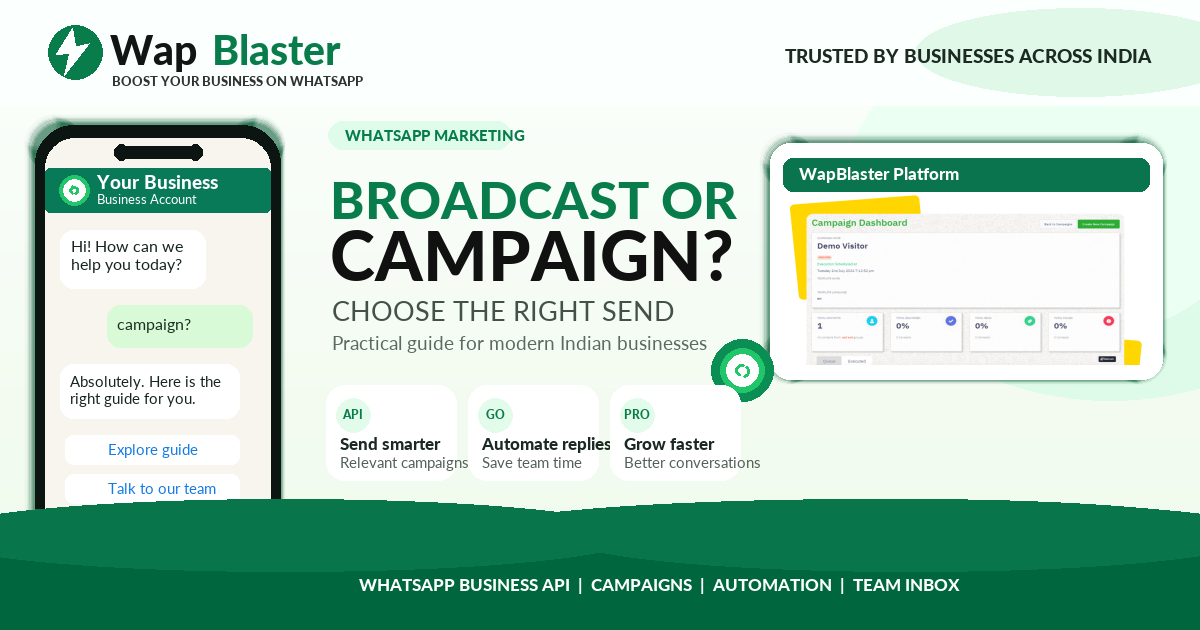
WapBlaster powers private, personalised, measurable broadcasts on the official API, the format that does the heavy lifting for business. Run smarter campaigns on the WapBlaster platform.
Frequently asked questions
Can I use WhatsApp groups for marketing?
It is not recommended. Groups expose members' numbers, get noisy, allow anyone to post and do not scale. Private API broadcasts are the right tool for customer marketing.
What is the difference between a broadcast and a Channel?
A broadcast sends private, personalised messages to opted-in customers who can reply to you directly. A Channel is a public, one-way feed people follow, with no private replies.
Do Channels replace API broadcasts?
No. Channels build a public audience but are one-way and public. Broadcasts remain the private, segmented, measurable way to message opted-in customers.
Which should a business start with?
Start with API broadcasts for direct customer messaging, then add a Channel for public reach and groups for close communities as needed.